CHIARI Giuseppe
(Firenze 1926 - Firenze 2007)
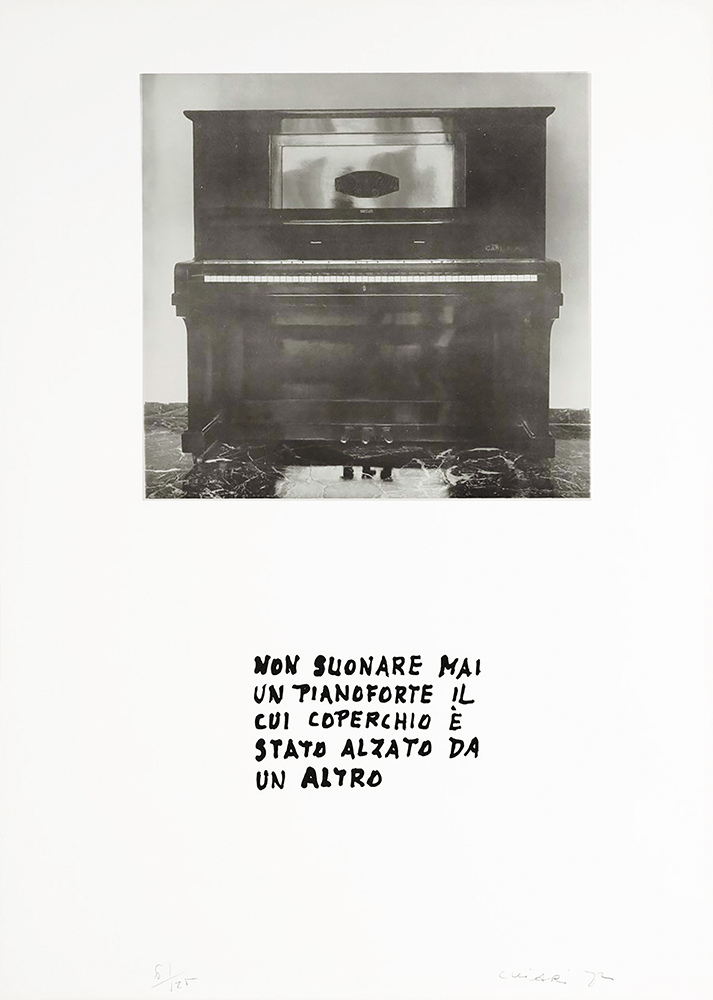
Non suonare mai un pianoforte il cui coperchio è stato alzato da un altro
Luogo: (Macerata)
Editore: (Artestudio Macerata)
Stampatore: senza indicazione dello stampatore
Anno: s.d. [1972]
Legatura: foglio impresso al solo recto
Dimensioni: 69x49 cm.
Pagine: N. D.
Descrizione: litografia su carta forte. Tiratura di 125 esemplari. Esemplare numerato e firmato dall'artista. Edizione originale.
Bibliografia: Biblioteca Panizzi, ART.G.161
Prezzo: € 350ORDINA / ORDER
Opera pubblicata nella cartella «Non c’è musica più bella di quella che sto ascoltando ora», (Macerata) Artestudio Macerata, s.d. (1972), costituita da 8 litografie numerate e firmate di Giuseppe Chiari.
"Se consideriamo le varie battaglie, una chiamiamola la musica elettronica, l’altra l’improvvisazione, infine il teatro musicale e tutto ciò che può venire dalla cosiddetta avanguardia o dal futurismo… queste tre attività sono state abbastanza combattute, e per me oggi sono perse. [...] Non si può dire che la musica elettronica abbia vinto: se ne può fare tranquillamente a meno. Tutte l’enorme fiducia che avevamo nell’improvvisazione, tutto il fiato, il coraggio il sacrificio che abbiamo messo nell’improvvisazione, cosa ce ne rimane? Certo ci sono ancora musicisti che improvvisano, ma l’improvvisazione come pratica non è «entrata». Io ho suonato l’acqua, ho suonato un foglio di carta, l’ho strappato lentissimamente, ho suonato cinque o sei sassi su un pezzo di vetro. Ho suonato la città, la strada, la stanza: sono tutte cose che possono essere considerate ancora interessanti o geniali, se vogliamo. «Geniali» tra virgolette. Ma dire che sono «entrate», come dici tu, nella storia della musica, che siano «entrate» nel costume, nella musica di oggi, non è vero, sarebbe un’inesattezza. Cioè, la musica, oggi, di tutto quel che ho fatto ne fa tranquillamente a meno, e io devo constatare questo. [...] Però questo non significa che abbia sbagliato, o che non abbia fatto ciò che avevo la sensazione e il dovere di fare" (Giuseppe Chiari, intervistato da Girolamo De Simone il 14 marzo 2006). - - - “If we consider the various battles - one we might call electronic music, another improvisation, and finally musical theatre and everything that could come from the so-called avant-garde or futurism… these three activities have been fought quite intensely, and for me today they are lost. [...] One cannot say that electronic music has won: one can quite easily do without it. All the enormous trust we had in improvisation, all the breath, courage, and sacrifice that we put into improvisation - what remains of it? Of course there are still musicians who improvise, but improvisation as a practice has not «entered». I played water, I played a sheet of paper, tearing it very slowly, I played five or six stones on a piece of glass. I played the city, the street, the room: all things that can still be considered interesting or even brilliant, if we want. «Brilliant» in quotation marks. But to say that they have «entered», as you say, into the history of music - that they have «entered» into common practice, into the music of today - is not true; it would be inaccurate. In other words, music today can quite easily do without everything I have done, and I must acknowledge this. [...] However, this does not mean that I was wrong, or that I did not do what I felt and believed it was my duty to do” (Giuseppe Chiari, interviewed by Girolamo De Simone on 14th of March 2006).
"Se consideriamo le varie battaglie, una chiamiamola la musica elettronica, l’altra l’improvvisazione, infine il teatro musicale e tutto ciò che può venire dalla cosiddetta avanguardia o dal futurismo… queste tre attività sono state abbastanza combattute, e per me oggi sono perse. [...] Non si può dire che la musica elettronica abbia vinto: se ne può fare tranquillamente a meno. Tutte l’enorme fiducia che avevamo nell’improvvisazione, tutto il fiato, il coraggio il sacrificio che abbiamo messo nell’improvvisazione, cosa ce ne rimane? Certo ci sono ancora musicisti che improvvisano, ma l’improvvisazione come pratica non è «entrata». Io ho suonato l’acqua, ho suonato un foglio di carta, l’ho strappato lentissimamente, ho suonato cinque o sei sassi su un pezzo di vetro. Ho suonato la città, la strada, la stanza: sono tutte cose che possono essere considerate ancora interessanti o geniali, se vogliamo. «Geniali» tra virgolette. Ma dire che sono «entrate», come dici tu, nella storia della musica, che siano «entrate» nel costume, nella musica di oggi, non è vero, sarebbe un’inesattezza. Cioè, la musica, oggi, di tutto quel che ho fatto ne fa tranquillamente a meno, e io devo constatare questo. [...] Però questo non significa che abbia sbagliato, o che non abbia fatto ciò che avevo la sensazione e il dovere di fare" (Giuseppe Chiari, intervistato da Girolamo De Simone il 14 marzo 2006). - - - “If we consider the various battles - one we might call electronic music, another improvisation, and finally musical theatre and everything that could come from the so-called avant-garde or futurism… these three activities have been fought quite intensely, and for me today they are lost. [...] One cannot say that electronic music has won: one can quite easily do without it. All the enormous trust we had in improvisation, all the breath, courage, and sacrifice that we put into improvisation - what remains of it? Of course there are still musicians who improvise, but improvisation as a practice has not «entered». I played water, I played a sheet of paper, tearing it very slowly, I played five or six stones on a piece of glass. I played the city, the street, the room: all things that can still be considered interesting or even brilliant, if we want. «Brilliant» in quotation marks. But to say that they have «entered», as you say, into the history of music - that they have «entered» into common practice, into the music of today - is not true; it would be inaccurate. In other words, music today can quite easily do without everything I have done, and I must acknowledge this. [...] However, this does not mean that I was wrong, or that I did not do what I felt and believed it was my duty to do” (Giuseppe Chiari, interviewed by Girolamo De Simone on 14th of March 2006).